

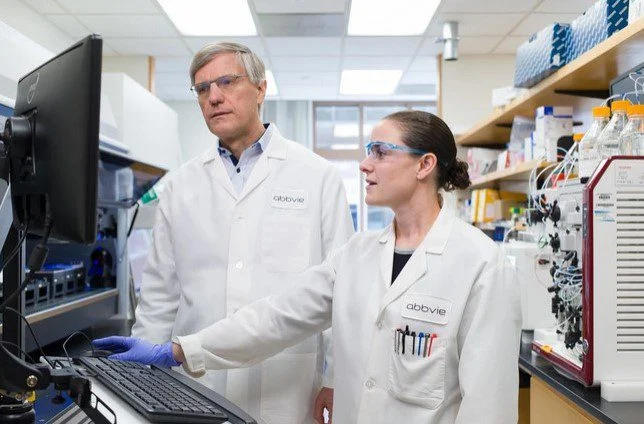
SAN DIEGO — In a move that signals a significant intensification of the global battle for dominance in the immunology and inflammation (I&I) market, pharmaceutical giant AbbVie has officially entered into a definitive agreement to acquire Apogee Therapeutics for $10.9 billion. The deal, announced today, provides AbbVie with a potent new asset—the IL-13 inhibitor zumilokibart (APG777)—which is being fast-tracked for Phase III clinical trials in the latter half of this year.
For AbbVie, a company that has spent the last several years successfully navigating the post-Humira landscape, this acquisition is not merely an expansion; it is a calculated effort to secure a “best-in-class” challenger to one of the most lucrative drug franchises in medical history: Sanofi and Regeneron’s Dupixent.
Main Facts: The Anatomy of the Deal
Under the terms of the agreement, AbbVie will acquire all outstanding shares of Apogee Therapeutics for $135.11 per share in cash. This represents a substantial 49.5% premium over Apogee’s closing stock price on the previous Friday. The boards of directors at both companies have unanimously approved the transaction, which is currently slated to close in the third quarter of this year, pending customary regulatory approvals and the blessing of Apogee shareholders.
The centerpiece of the acquisition is zumilokibart, an IL-13 inhibitor that has demonstrated remarkable potential in treating moderate-to-severe atopic dermatitis (AD). Beyond AD, Apogee’s pipeline includes a suite of combination therapies targeting broader inflammatory pathways, such as OX40L and TSLP inhibitors, which the company claims could address a “pipeline-in-a-product” opportunity across various immunological conditions.
The market response was immediate and bullish. Following the announcement, Apogee’s shares soared 47%, climbing to $132.65 in early trading, while AbbVie shares saw a healthy uptick of 4.5%, reflecting investor confidence in the long-term accretion of this deal.
Chronology: From Startup to Global Acquisition
The trajectory of Apogee Therapeutics has been nothing short of meteoric. Since its inception in 2022, the company has operated with a laser-focused objective: to redefine the dosing paradigm for monoclonal antibodies in dermatology and respiratory health.
- 2022: Apogee Therapeutics is founded with a mandate to leverage advanced protein engineering to create treatments with extended half-lives and superior tolerability.
- May 2026: Apogee releases pivotal 16-week data from Part B of its Phase II APEX trial. The results show that 65.9% of patients treated with the mid-dose of zumilokibart achieved EASI-75—a primary endpoint for atopic dermatitis—with a 41.9% placebo-adjusted improvement.
- June 2026: To bolster its financial runway for the upcoming Phase III transition, Apogee secures a $1.3 billion non-dilutive capital arrangement. This included $800 million in synthetic royalty funding from Blackstone, contingent upon future sales, and $500 million in available senior corporate debt.
- Late June 2026: AbbVie initiates and finalizes acquisition talks, recognizing that Apogee’s clinical progress had reached an inflection point that made it a prime candidate for integration into a global commercial infrastructure.
Supporting Data: Why Zumilokibart Stands Out
The enthusiasm surrounding the Apogee acquisition is rooted in the clinical performance of zumilokibart. As Edward Nash, a managing director and senior biotechnology analyst at Canaccord Genuity, noted in a recent research brief, the drug is widely considered one of the most attractive assets in the I&I space today.
The Dosing Advantage
The "big differentiator," according to industry analysts, is the drug’s half-life. While many existing biologics for AD require frequent injections, zumilokibart has shown the potential to be dosed once every three to six months. This shift from monthly to quarterly dosing represents a profound shift in patient convenience and compliance, which could fundamentally reshape the standard of care.
Statistical Significance
In the APEX trial, the mid-dose cohort exhibited the best clinical activity. The high statistical significance of these results provided the regulatory confidence necessary to justify the move to Phase III. Furthermore, the drug was well-tolerated, mitigating fears of the toxicity often associated with the potent inhibition of inflammatory pathways.
Official Responses: A Shared Vision for the Future
Leadership from both sides of the deal expressed optimism regarding the synergy between AbbVie’s massive commercial engine and Apogee’s innovation-heavy pipeline.
Robert A. Michael, Chairman and CEO of AbbVie:
"For more than two decades, AbbVie has led and shaped the field of immunology, bringing the science, scale, and expertise needed to address some of the most complex diseases. The acquisition of Apogee further builds on our existing leadership, strengthening our ability to deliver innovative medicines to patients who need better options while also creating significant long-term value for shareholders."
Dr. Michael Henderson, CEO of Apogee Therapeutics:
"This transaction reflects the strength of Apogee’s vision, our team’s dedication, and the significant progress we’ve made advancing zumilokibart and our differentiated pipeline. We believe AbbVie can advance our portfolio while expanding its impact for patients worldwide. This deal positions our programs to reach their full potential."
Implications: The Competitive Landscape
A Direct Challenge to Dupixent
The most immediate implication of this acquisition is the direct threat to Dupixent (dupilumab). With annual sales exceeding $18 billion, Dupixent has become the gold standard for AD. However, with patent exclusivity set to expire in 2031, the market is bracing for a shift. By acquiring zumilokibart now, AbbVie is positioning itself to be the primary disruptor by the time the current market leader faces generic or biosimilar competition.
Strengthening the I&I Portfolio
AbbVie is no stranger to the I&I market, having dominated it for years with Humira. Despite the loss of exclusivity, the company has successfully transitioned its portfolio to newer blockbusters like Skyrizi and Rinvoq. Skyrizi, in particular, has become a juggernaut, generating $17.562 billion in 2025. Adding Apogee’s pipeline ensures that AbbVie’s dominance in immunology remains unassailable through the next decade.
A One-Two Punch
Apogee’s pipeline is not limited to zumilokibart. The inclusion of combination therapies like APG279 (a combination of zumilokibart and an OX40L inhibitor) offers a multi-pronged approach to inflammation. Preclinical studies have suggested that this combination could achieve “JAK-like” inhibition of Type 1, 2, and 3 signaling, offering a superior safety profile compared to current small-molecule JAK inhibitors, which often carry significant safety warnings.
Market Context and Future Outlook
The $10.9 billion price tag places this deal as the third-largest biopharma M&A transaction of 2026, trailing only the massive $12.268 billion buyout of Recordati and the $11.75 billion acquisition of Organon. This flurry of high-value deals underscores a broader industry trend: large-cap pharma companies are aggressively deploying their cash reserves to acquire de-risked, late-stage clinical assets to fill their pipelines as existing patents age.
As the industry looks toward the second half of 2026, all eyes will be on the launch of the Phase III trials for zumilokibart. If the clinical results in the larger, more diverse patient populations of Phase III reflect the promise seen in the Phase II APEX trial, AbbVie will have successfully cemented its position as the undisputed leader in the next generation of immunological treatments.
For patients suffering from atopic dermatitis, asthma, and eosinophilic esophagitis, the acquisition represents a beacon of hope—a potential future where the burden of chronic disease is significantly reduced by more effective, less frequent, and better-tolerated treatments. For investors, it is a clear statement that despite the shifting patent landscape, the era of the immunology blockbuster is far from over.
